

 Back
Pat Cummins’ passionate 78-minute press conference refuting Usman Khawaja’s “we all knew” claim, comments from 12th man Chadd Sayers, and the testimony of the man himself, Cameron Bancroft, confirmed what we had all suspected: more than three people knew.
In his 4500-word article, Bancroft does concede that
“…there is a distinction between knowing a ball is reversing, suspecting it has been altered and knowing specifically that sandpaper has been used.”
Since there is a hint of doubt remaining, we want to learn what happens to a cricket ball when sandpaper is applied at each stage.
In 2018 in South Africa, was there any chance that the Australian pace attack did not know there was sandpaper being applied to the cricket ball?
I do not know this answer, for I have never tampered with the ball myself. So I decided to do an experiment. I tried to learn how to ball tamper with sandpaper from first principles via the scientific method.
For this experiment, I bought a
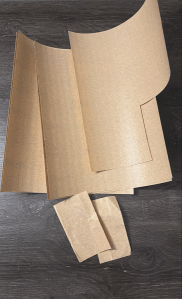
Phase 0: The Prep For this experiment, I bought a – 156-gram red leather cricket ball – 220 grit yellow sheets of sandpaper 🚨 The Question: Could the Australian 🇦🇺 pace attack in 2018 in South Africa 🇿🇦 not have known that sandpaper was being used on the ball? (2/14) https://t.co/bFCE6RZZKo
— Broken Cricket Dreams Cricket Blog (@cricket_broken) November 22, 2026
I wanted to give the bowlers the benefit of the doubt and not start with any of my own internal biases. The two main possibilities were as follows:
Now to the crux of the matter, the actual experiment. We conducted this experiment in 3 stages:
For the first two stages and beginning of the third stage, we applied sandpaper 20 times (10 times in 2 different locations) on the ball, swiping from left to the right.
In the later stages of Stage 3 (where we sanded the rough side of the ball between every delivery), we applied sandpaper 4-5 times per use.
For shining the ball, I mainly used saliva with handkerchief followed by rubbing the ball on trouser (sweat was also an option, but was not used for this version of the experiment).
For comparison, here is state of the original ball: The ‘Supreme’ hand stitched versus the logo side (this will be the sandpapered side).
After the initial round of sandpapering, this is how the ball looked like.
*Note: We are not testing how reverse swing works so I applied sandpaper on a new ball to see how the marks look even though this would not have happened in real life.
| Time | Balls Knocked | Observations |
| 9:54-9:59 AM | #1-60 | Initially, I knocked the ball without stopping (so the bat may have hit both sides). After about Ball 5, I switched to catching the ball and dropping it again so only the rough side is knocked on. |
| 10:01-10:04 AM | #61-120 | |
| 10:05-10:09 AM | #121-180 | I dropped balls #168 and 174 which hit the wooden floor. One of these instances caused a scratch on the shiny side of the ball. |
| 10:11-10:14 AM | #181-240 | Ball #207 was dropped on the floor as well. |
Here is the shiny side with the scratch.
♦️ Stage 2: Knocking 11/21 9:54-9:59 AM: First 60 Balls 10:01-10:04 AM: 61-120 10:05-10:09 AM: 121-180 10:11-10:14 AM: 181-240 Note: Balls #168, 174, and 207 dropped on the floor while knocking, which may have caused a tiny scratch on the shiny side of the ball (5/14) https://t.co/4KBA5Cfuux
— Broken Cricket Dreams Cricket Blog (@cricket_broken) November 22, 2026
After Stage 2 was complete, I applied sandpaper on the logo side 20 times again. This is how it looked.
☀️After Stage 2 was complete, I applied sandpaper on the logo side 20 times again. This is how it looked. (6/14) https://t.co/zvDmDfI1Ua
— Broken Cricket Dreams Cricket Blog (@cricket_broken) November 22, 2026
I wanted to take this up a notch and went outside and try to find different surfaces to get natural wear and tear of the ball.
I did not like any of these options so decided to drive to one of the local cricket ground.

Now that we had used the ball indoors and in different places, it was time to bowl my medium pace dibbly dobblies.
I ended up bowling 60 balls on this pitch and used sandpaper at different points.
After these 12 balls, I used sandpaper 20 times on the logo side of the ball and used saliva to shine the ‘Supreme’ side of the ball
Observation: Natural wear and tear had begin to occur on both sides of the ball at this stage.
🏏 Stage 4: The Actual Experiment Now that we had used the ball indoors and in different places, it was time to bowl my medium pace dibbly dobblies. I ended up bowling 60 balls on this pitch and used sandpaper at different points. 11:36 AM: Back to the cricket carpet 11:52 AM: Ball Check #1 12 Deliveries Done, did not use artificial substances, between deliveries ☀️ After these 12 balls, I used sandpaper 20 times on the logo side of the ball and used saliva to shine the ‘Supreme’ side of the ball 🔍Observation: Natural wear and tear had begin to occur on both sides of the ball at this stage. (8/14)
— Broken Cricket Dreams Cricket Blog (@cricket_broken) November 22, 2026
Observation: At this stage, I could NOT distinguish if sandpaper had been previously used. I could see natural markings on both sides of the ball and any previous hints of sandpaper use was not evident.
Now that we had bowled 30 deliveries total, it was time to apply sandpaper again.
Ball Check #2 12:01-12:25 PM: Bowled 18 more deliveries, did not use any artificial substances between deliveries. 🔍 Observation: At this stage, I could NOT distinguish if sandpaper had been previously used. I could see natural markings on both sides of the ball and any previous hints of sandpaper use was not evident. ☀️ Now that we had bowled 30 deliveries total, it was time to apply sandpaper again. (9/14)
— Broken Cricket Dreams Cricket Blog (@cricket_broken) November 22, 2026
From balls 31-48, I now used artificial substances between EVERY delivery.
After I would bowl, I would go pick up the ball. On the walk back, I would use saliva/handkerchief to shine the ‘Supreme’ side of the ball and rubbed the ball on my trousers. In addition, I used sandpaper 4-5 times between each delivery on the logo side.
Observation: Within 6 deliveries of sandpapering the logo side (to mimic the situation where each ball is going to the keeper > then to a fielder who shines the ball/sandpapers the rough side before throwing it back to the bowler), the logo completely disappeared. It left white marks, and you could definitely make out that an external substance was being used.
Ball Checks #3-5 ☀️☀️ From balls 31-48, I now used artificial substances between EVERY delivery. – After I would bowl, I would go pick up the ball – On the walk back, I would use saliva/handkerchief to shine the ‘Supreme’ side of the ball and rubbed the ball on my trousers – In addition, I used sandpaper 4-5 times between each delivery on the logo side 12:36 PM: Ball Check #3 after bowling 6 deliveries 🔍 Observation: Within 6 deliveries of sandpapering the logo side (to mimic the situation where each ball is going to the keeper > then to a fielder who shines the ball/sandpapers the rough side before throwing it back to the bowler), the logo completely disappeared. It left white marks, and you could definitely make out that an external substance was being used. Ball Check #4: 6 balls later, the logo had completely disappeared. The rough side and shiny side looked like distinct objects at this point. The lacquer had worn off on the rough side. 12:48 PM: Ball Check #5 After 18 successive deliveries of sandpapering one side and shining the other – The rough side now had a pinkish-white shade to it. You can clearly see the tear on this side and sandpaper marks. (10/14)
— Broken Cricket Dreams Cricket Blog (@cricket_broken) November 22, 2026
Observation: The pink hue had gone, there were still white marks and scratch patterns on this side. However, the natural wear and tear on this side had increased so if a new bowler looked at this in first glance, they *may not* notice that sandpaper or external substance was being used.
Final Ball Check #6 For this last 12 deliveries, I only shined the ball between deliveries and did not do anything to the rough side 🔍 Observation: The pink hue had gone, there were still white marks and scratch patterns on this side. ❗️However, the natural wear and tear on this side had increased so if a new bowler looked at this in first glance, they *may not* notice that sandpaper or external substance was being used. (11/14)
— Broken Cricket Dreams Cricket Blog (@cricket_broken) November 22, 2026
I wanted to see how much of a difference we would get between natural proceedings and sandpaper ball tampering.
So, what did I learn from this experiment?
And more than the pattern of the sandpaper marks, it would be the slight discoloration you get if sandpaper is applied enough times on a red cricket ball that would give it away.
The question then becomes:
If I were to repeat this experiment in the future, I would have made the following changes:
This was a fun little side project I was curious about. Thank you all for reading and watching the videos in the twitter thread.
Now I am left with a
And a whole bunch of sandpaper.
****
 Back
 Top
| Privacy StatementTerms of ServiceContact | Refresh  |